Countertops are among the most noticeable features in kitchens and bathrooms, making them an important decision in any remodeling project. Beyond appearance, countertops must also withstand daily use, resist damage, and complement the space’s overall design.
Homeowners often choose countertops based solely on style, but durability, maintenance requirements, and long-term performance are equally important considerations. Understanding the strengths and limitations of different countertop materials helps homeowners select surfaces that match both their lifestyle and their renovation goals.
By comparing the best countertop materials for kitchen remodel projects, remodelers can make more informed decisions that balance beauty with practicality.
Granite: Natural Beauty With Strong Durability
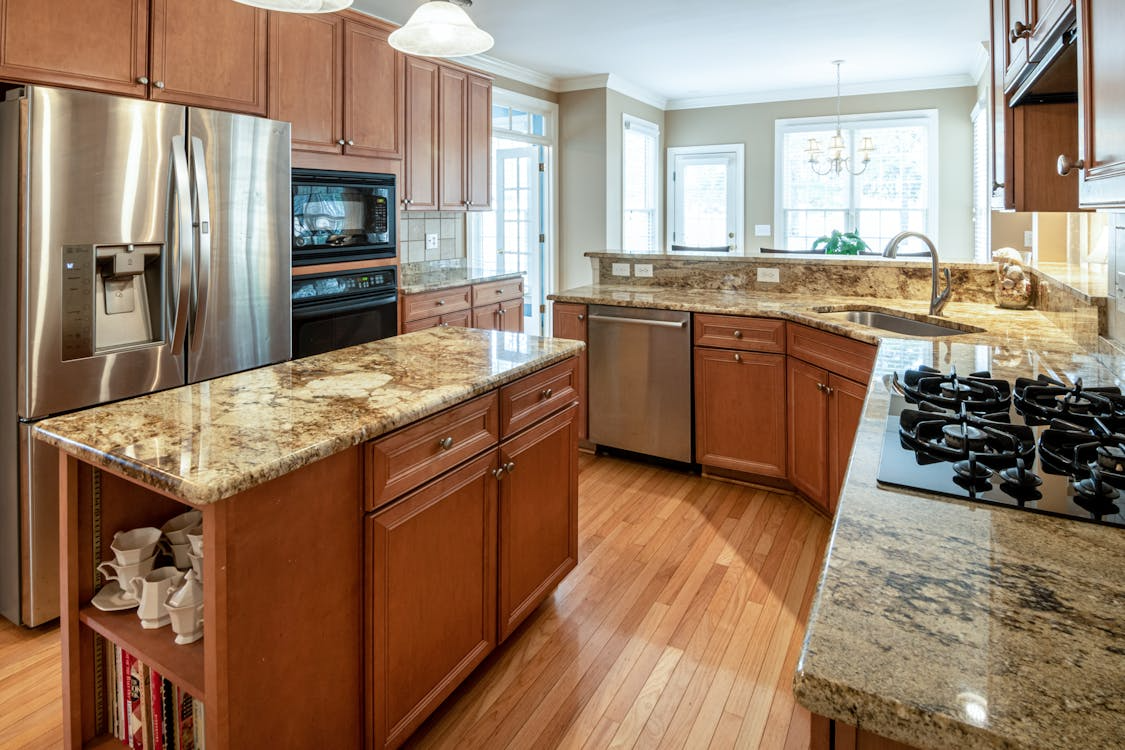
Granite countertops remain one of the most popular choices in kitchen remodeling because of their natural appearance and durability. Each slab of granite is unique, providing distinctive patterns and color variations that add character to a space.
Granite is highly resistant to heat and scratching, making it well-suited for busy kitchens. With proper sealing, it can also effectively resist stains and moisture.
However, granite requires periodic sealing to maintain its protective surface. Because it is a natural stone, its patterns and colors may vary significantly, which some homeowners love while others find it difficult to match with design elements.
See Kitchen Remodel Ideas That Improve Everyday Functionality for practical kitchen design ideas.
Quartz: Low Maintenance And Consistent Appearance
Quartz countertops are engineered surfaces made from natural stone particles combined with resins. This manufacturing process creates a material that is extremely durable and highly resistant to stains and scratches.
One of the major advantages of quartz is that it requires very little maintenance. Unlike natural stone surfaces, quartz typically does not need sealing because it is non-porous.
Quartz also offers consistent patterns and colors, which make it easier to coordinate with cabinets and backsplashes. However, quartz surfaces can be more sensitive to extreme heat than natural stone, so homeowners should still use protective pads for hot cookware.
Explore Choosing Flooring That Works For Your Lifestyle for durable material ideas.
Marble: Elegant But High Maintenance
Marble countertops are known for their classic beauty and luxurious appearance. The soft veining patterns and light tones often create a timeless aesthetic that many homeowners admire.
However, marble is softer and more porous than many other countertop materials. This means it can be scratched, stained, or etched more easily when exposed to acidic substances such as lemon juice or vinegar.
Because of these characteristics, marble requires careful maintenance and regular sealing. Some homeowners embrace the natural patina that develops over time, while others may prefer more durable alternatives for heavy-use kitchens.
Read Cabinet Design Choices That Impact Kitchen Functionality for smart storage ideas.
Laminate: Affordable And Versatile
Laminate countertops have been used in homes for decades and remain a budget-friendly option for remodeling projects. Modern laminate designs can mimic the appearance of natural stone, wood, or other materials.
One of the main advantages of laminate is its affordability. It allows homeowners to update countertops without the higher costs of natural stone.
However, laminate is generally less durable than other materials. It can be vulnerable to scratches, heat damage, and moisture infiltration if seams are not properly sealed.
Learn How To Decide Which Remodeling Projects Add The Most Value for renovation planning insights.
Solid Surface Materials: Seamless And Repairable
Solid surface countertops are made from acrylic or polyester-based materials, creating smooth, seamless surfaces. Popular in both kitchens and bathrooms, these countertops offer a uniform appearance and integrated sink designs.
One advantage of solid-surface materials is that minor scratches or stains can often be repaired by sanding or polishing. This feature allows the countertop to maintain its appearance over time.
However, these materials are typically less heat-resistant than natural stone and may show wear more quickly in high-use areas.
Choosing the right countertop material requires balancing appearance, durability, maintenance, and budget. Granite and quartz provide durability and visual appeal, while marble offers timeless elegance but requires higher maintenance.
Laminate and solid-surface materials offer more affordable alternatives while still offering attractive design options. Each material has advantages depending on how the space will be used.
By carefully comparing countertop materials before beginning a remodel, homeowners can select surfaces that support both the style and functionality of their renovated space.